Every year we are asked some version of the same question. My mother cannot walk far. My father had a stroke. I have a knee that gives out after twenty minutes. Can I still do this?
Yes. Both tawaf and sai can be performed in a wheelchair, and the Haram in Makkah is genuinely well set up for it, better than most buildings in the United States. We have sent many pilgrims who could not walk the distance, and the trips worked.
What makes the difference is planning the whole journey around the mobility, not just the tawaf.
Tawaf and sai in a wheelchair
It is valid. Performing tawaf and sai in a wheelchair, whether you push yourself or someone pushes you, is accepted. You do not need to walk any of it.
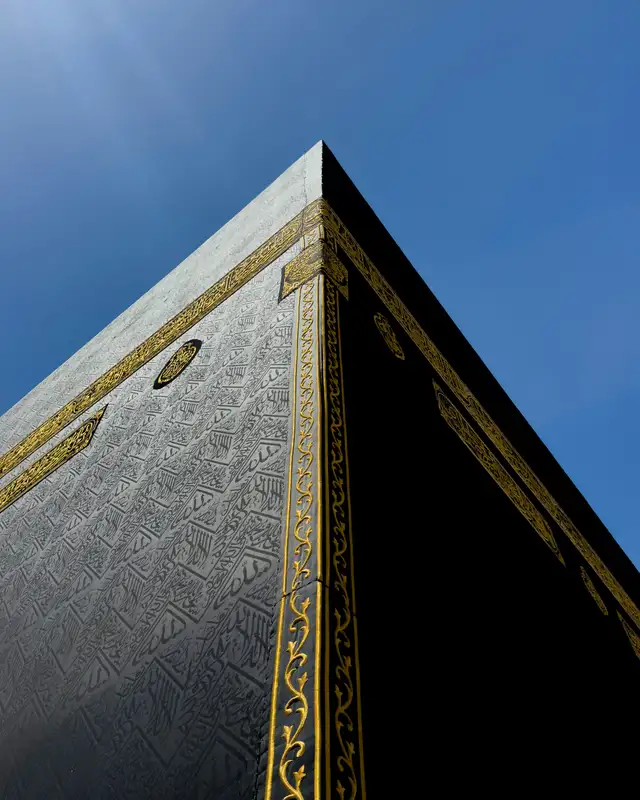
Where you do it matters. The ground floor mataf, right beside the Kaaba, is the most crowded and the hardest place to manoeuvre. There are dedicated areas and routes for wheelchairs, and the upper floors are far easier. The circuit upstairs is longer in distance but much faster in practice because you are not fighting the crowd. Most people in a wheelchair are better off on an upper level.
Sai between Safa and Marwah has a marked central lane for wheelchairs and carts, separated from the walking crowds. It is one of the better designed parts of the whole complex.
What is available at the Haram
Free manual wheelchairs. Available at several gates in both Makkah and Madinah, on a deposit or ID basis. Supply runs short in peak season, so arrive early if you are relying on this.
Paid pushers. You can hire someone to push the chair for the full tawaf and sai. Negotiate the price before you start, and agree whether it covers both tawaf and sai or just one. This is a well established service and the men who do it are fast and know the routes.
Electric carts and scooters. Available for hire inside the Haram, including the upper floors. These can be booked in advance during busy seasons and sometimes sell out, so ask about them early. They are the best option for someone who can sit upright comfortably but cannot walk, and they let the pilgrim keep their independence.
Golf cart style transport on the upper levels for longer distances.
Costs change and we are not going to quote a figure that will be wrong by the time you read this. Budget for it, ask at the time, and agree the price in advance for anything negotiated.
The parts people forget to plan
The tawaf is the bit everybody worries about. In our experience it is rarely the bit that goes wrong. These are:
The airport. Request wheelchair assistance when you book the flight, not at check in. Reconfirm 48 hours before. Jeddah in peak season is a long walk and the immigration queue can be two hours. Assistance gets you through a different line.
The hotel room. Ask specifically about a roll in shower, not just an accessible room. Ask about the door width. Ask whether the bathroom has grab rails. Many Makkah hotels say accessible and mean there is a lift.
Distance from the Haram. This is the single biggest decision. A hotel 800 metres away is nothing for a fit person and impossible five times a day for someone in a wheelchair in the heat. Pay for closeness. It is the best money you will spend on the trip. See hotels near the Haram.
Getting between cities. Door to door private car, not the train. The train is faster but it involves four transitions with luggage and a chair. We cover the comparison in the Haramain train guide.
The Rawdah visit in Madinah. There is wheelchair provision and separate timings, and the walk from the gate is substantial. Book the slot early. See how to get a Rawdah appointment.
Ziyarat. Some sites in Madinah are easy in a chair. Uhud has uneven ground. Be selective rather than trying to do everything. See Madinah ziyarat places to visit.
Should you bring your own chair?
Usually yes, if the pilgrim uses one regularly.
Bring your own if they have a chair fitted to them, or they will be in it most of the day. A familiar chair that fits properly prevents pressure sores and is simply more comfortable. Airlines carry wheelchairs free of charge and it does not count against your baggage allowance.
Hire locally if the chair is only needed for the Haram and the pilgrim can otherwise manage. Hiring avoids the risk of your own chair being damaged in transit, which does happen.
If you bring your own, photograph it before you check it in, remove anything detachable, and tag it clearly.
Planning the schedule itself
This is where most trips succeed or fail, and it has nothing to do with equipment.
- Allow more days. A trip that a fit person does in seven days needs ten. Fewer things per day, with real rest between them.
- One major activity per day. Umrah on one day. Rawdah on another. Ziyarat on a third. Not two.
- Use the quiet hours. After fajr and in the early afternoon the Haram is far emptier. A tawaf at 10am is a different experience from a tawaf after maghrib.
- Do not plan around the last ten nights of Ramadan unless the pilgrim specifically wants that and understands the crowds. The first or second ashra is far kinder. See when is Ramadan 2027.
- Build in a nothing day. No plans at all. People need it.
- Travel with enough hands. One person cannot push a chair, carry bags, manage documents and look after a second elderly parent. Two able adults per dependent pilgrim is the realistic ratio.
Medical needs beyond mobility
If the pilgrim needs dialysis, oxygen, insulin refrigeration, or regular monitoring, that is a different level of planning and it is entirely doable with notice.
We have built itineraries around a dialysis schedule, matching the trip to clinic availability in both cities. It takes a few weeks to arrange properly and it cannot be done last minute.
Bring medication in original labelled packaging in hand luggage, with a doctor’s letter. Some medicines routine in the US are restricted in Saudi Arabia. See vaccinations and health requirements.
An honest word about expectations
Some families arrive hoping their parent will manage more than they can, and the trip becomes a series of disappointments. Others plan for less than their parent can manage, and everyone has a wonderful time with energy to spare.
Plan for the harder day, not the better one. If your mother has good days and bad days, build the itinerary for a bad day. If she has a good one, you get a bonus.
And remember what you are actually there for. Nobody is counting steps. A pilgrim who completes Umrah in a wheelchair, slowly, with their family around them, has done the thing completely.
How we can help
This is work we do often and take seriously. We will ask you detailed questions about what the pilgrim can and cannot do, pick hotels on actual distance rather than marketing claims, arrange door to door transport, and sequence the days so nobody is wrecked by day three.
For group departures we are honest about whether a group trip suits a particular pilgrim, because sometimes it does not and a private itinerary is the right answer.
Tell us about who is travelling and we will tell you plainly what is realistic.